Nemo
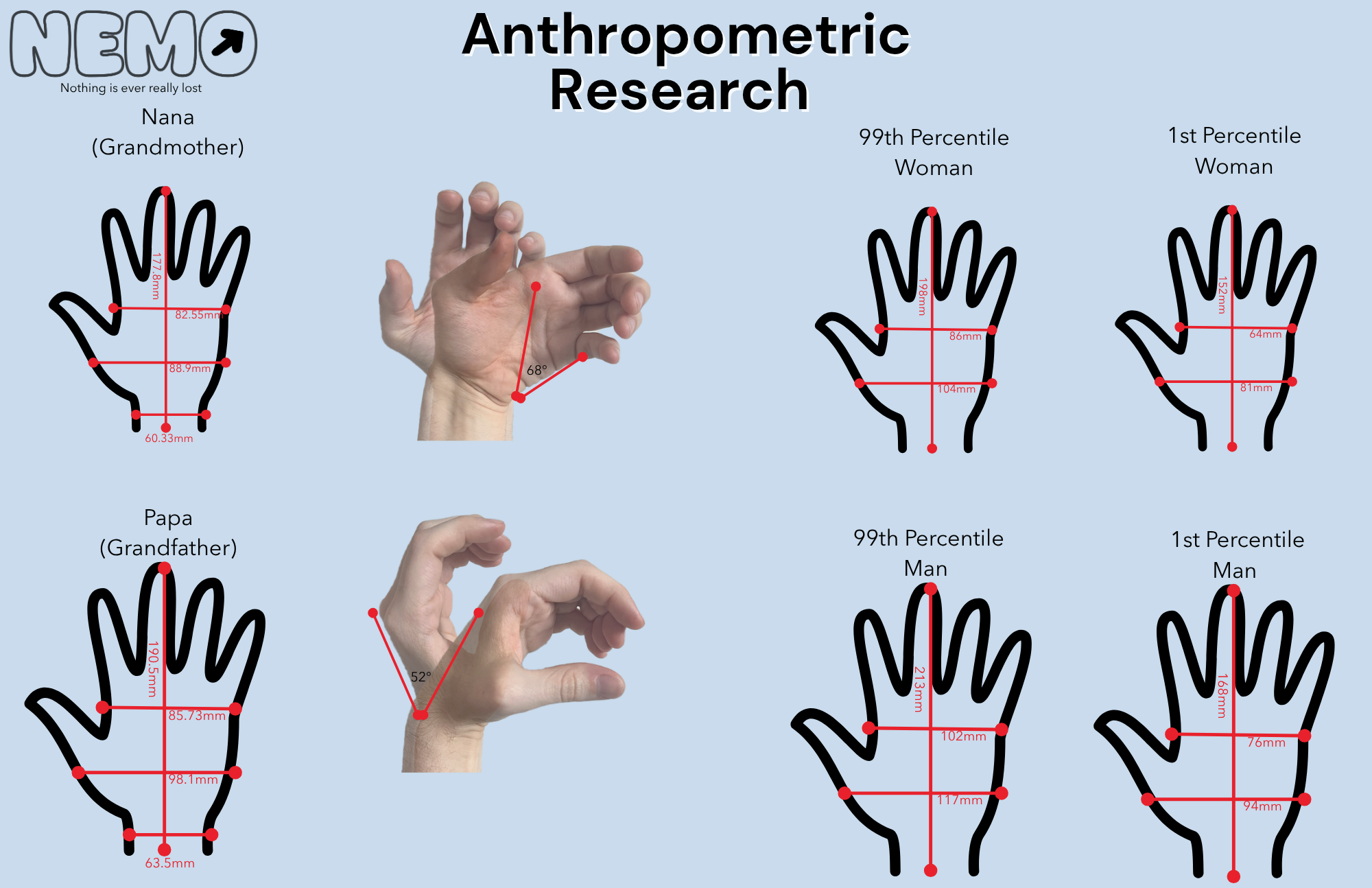
For my Human Factors course, I was tasked with identifying a specific underserved user group and designing an inclusive handheld device to address their unique challenges. I focused on individuals living with Alzheimer’s disease.
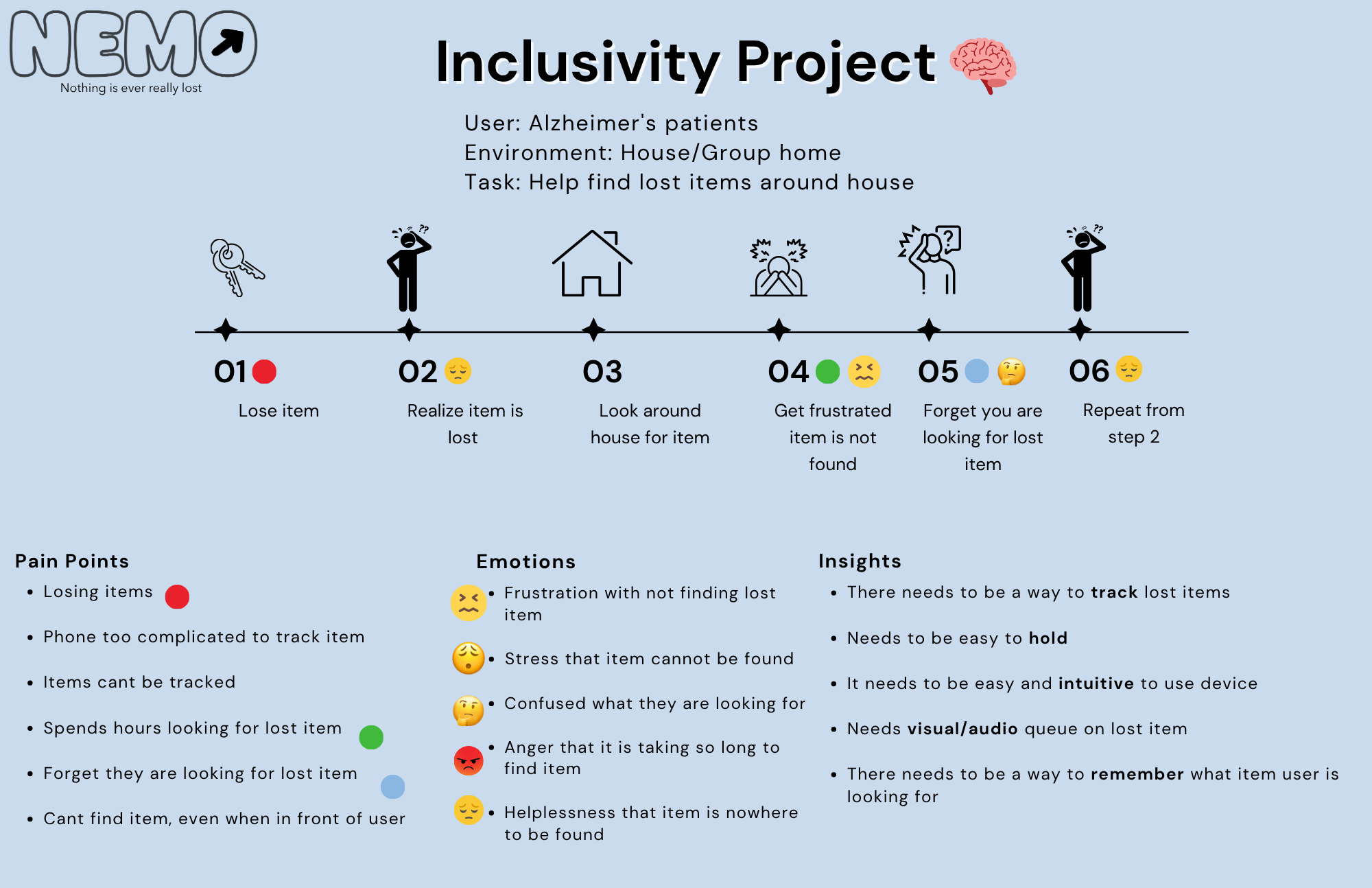
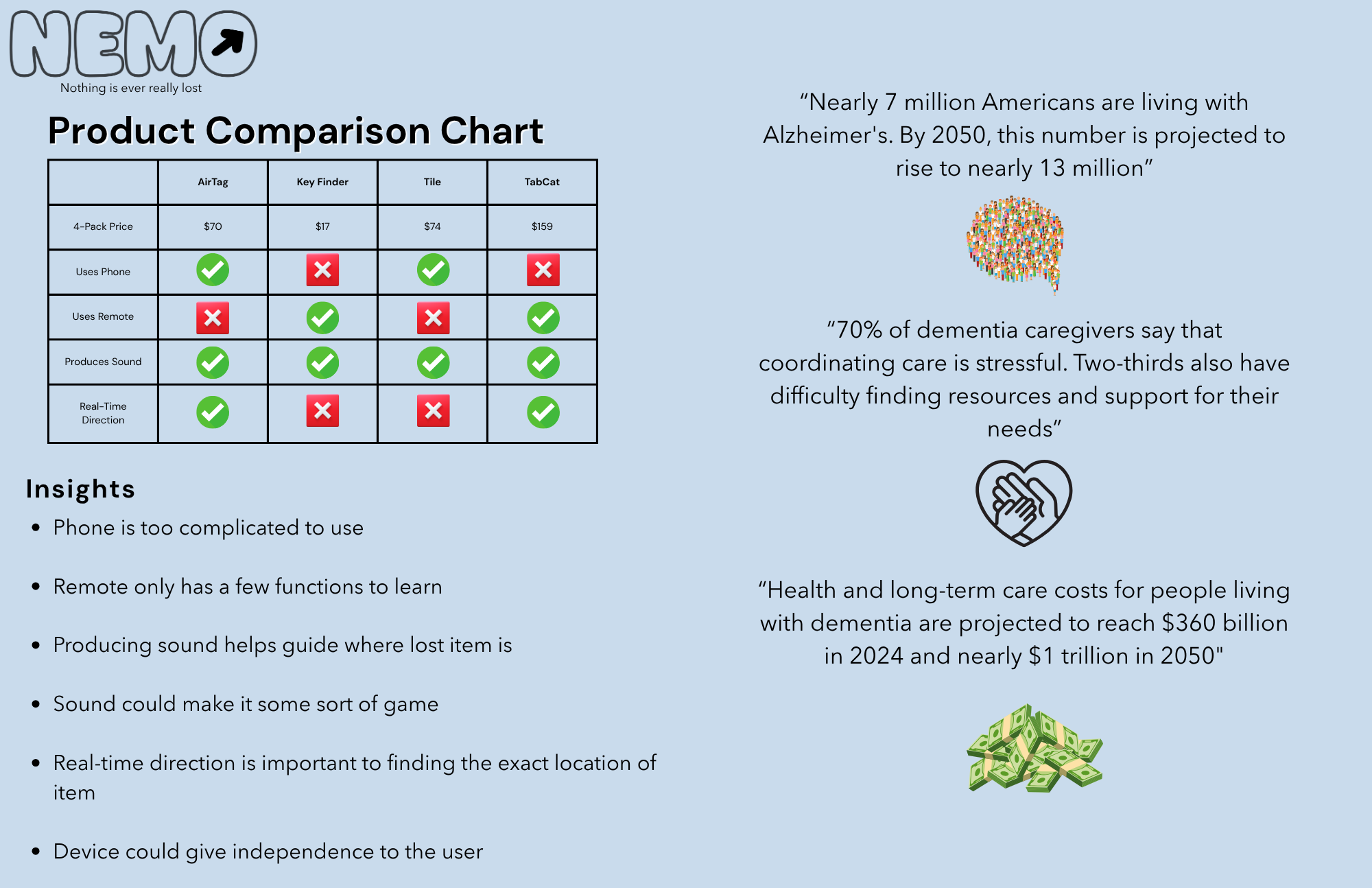
Through firsthand research with my grandmother, who has Alzheimer’s, I observed a recurring challenge: frequently misplacing essential everyday items such as her phone, glasses, and purse. While existing solutions like smartphones and AirTag-style trackers technically addressed this problem, they proved ineffective in practice due to cognitive load, learning complexity, and difficulty retaining usage steps over time.
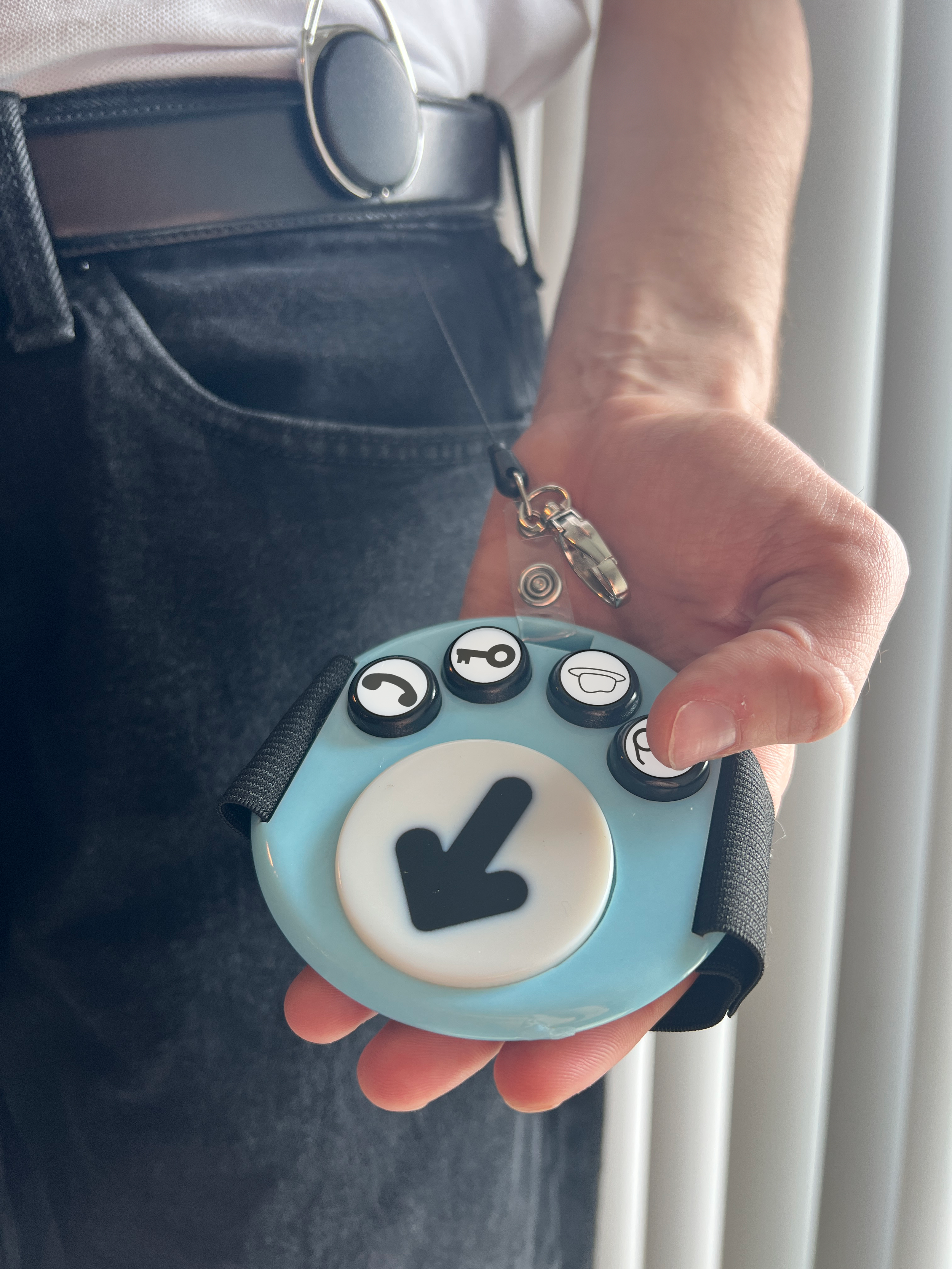
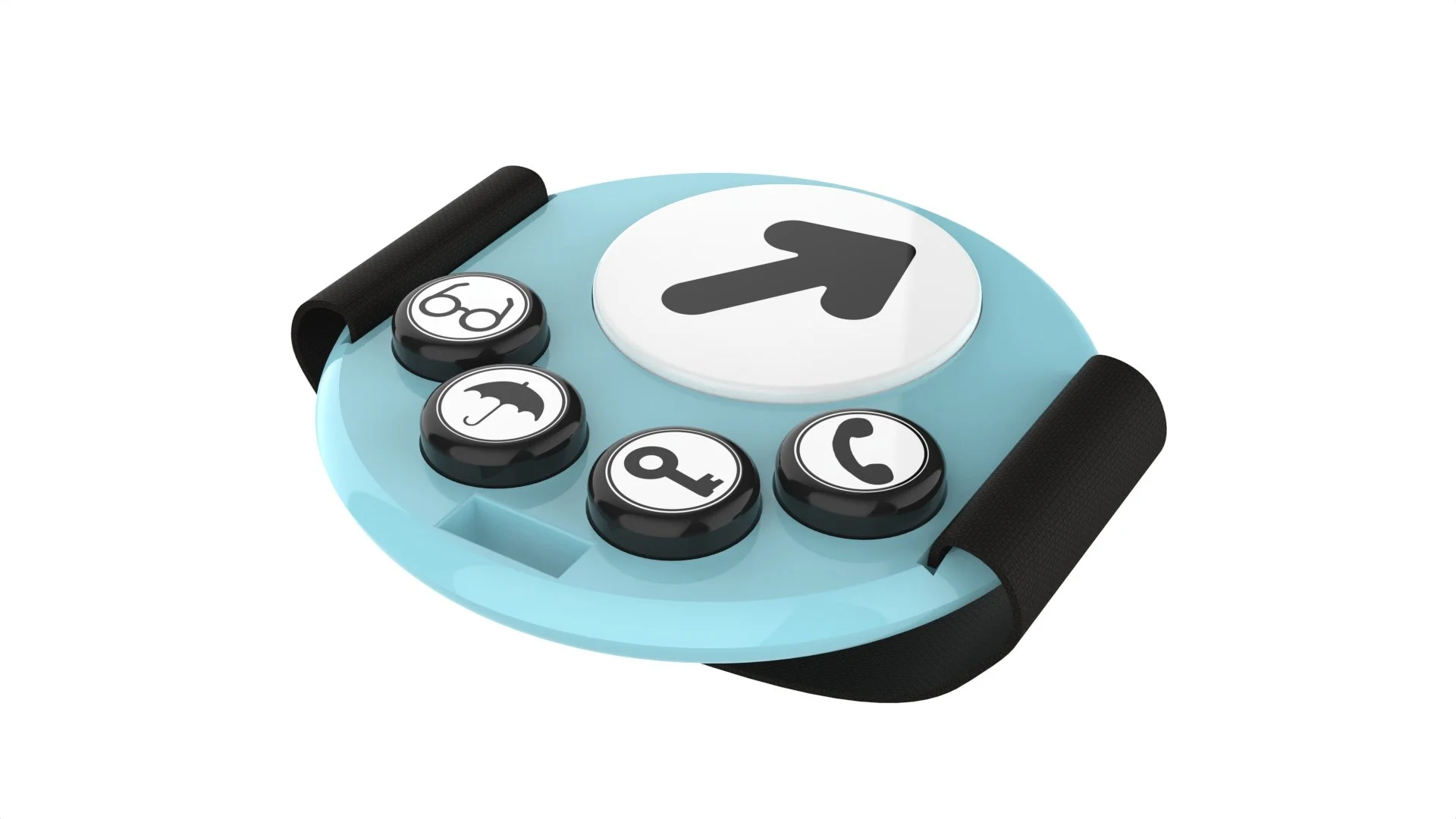
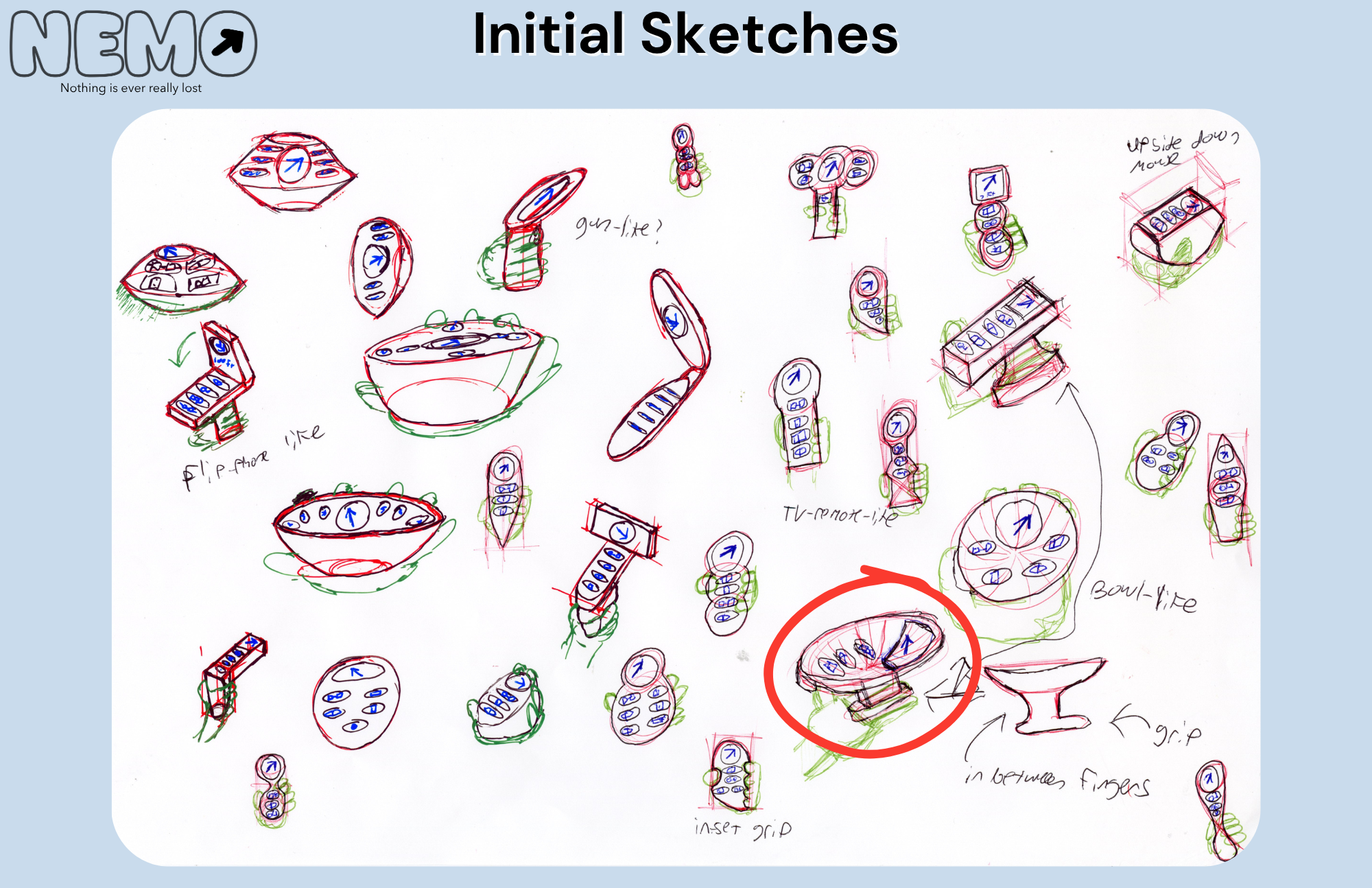
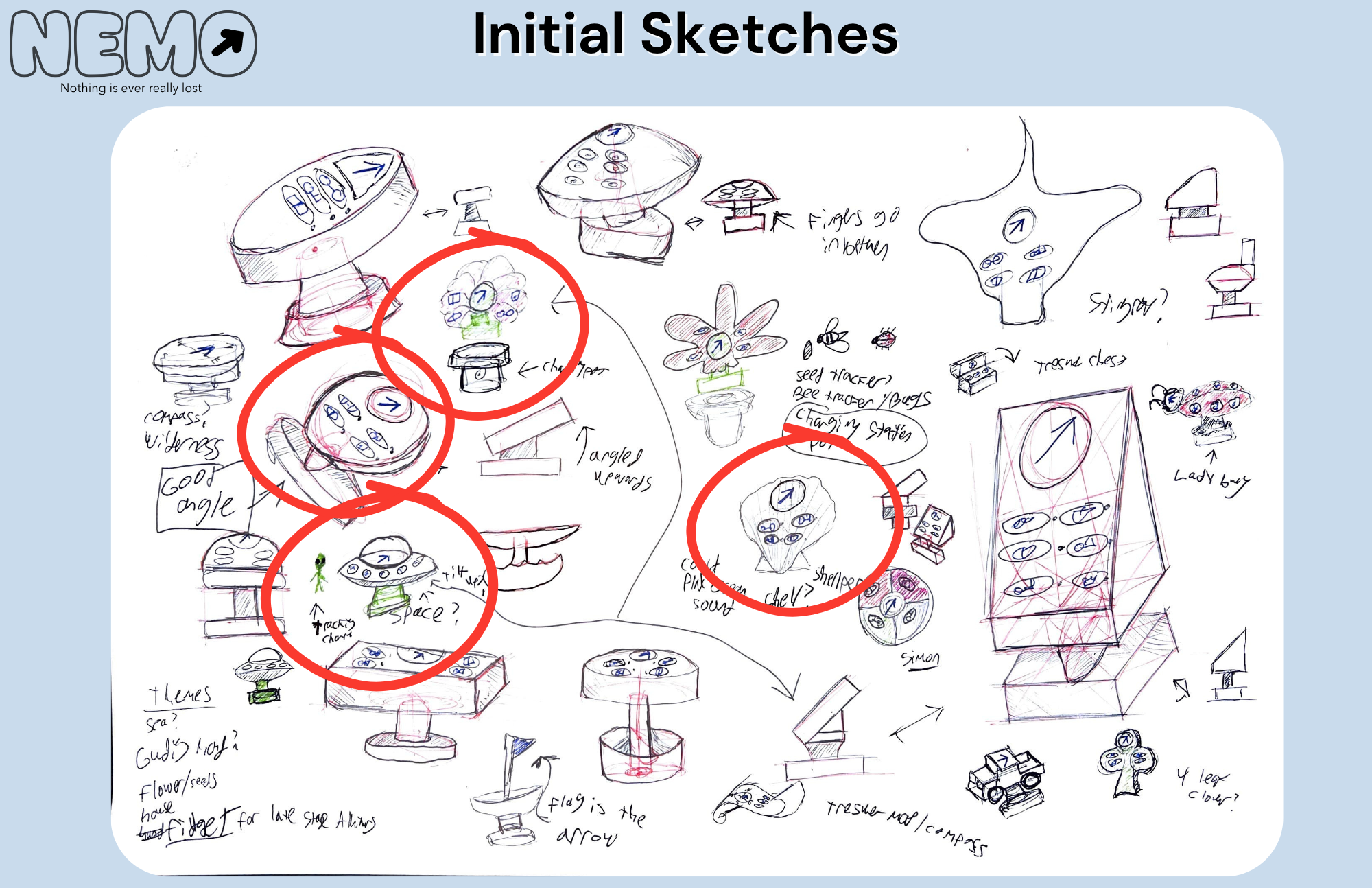
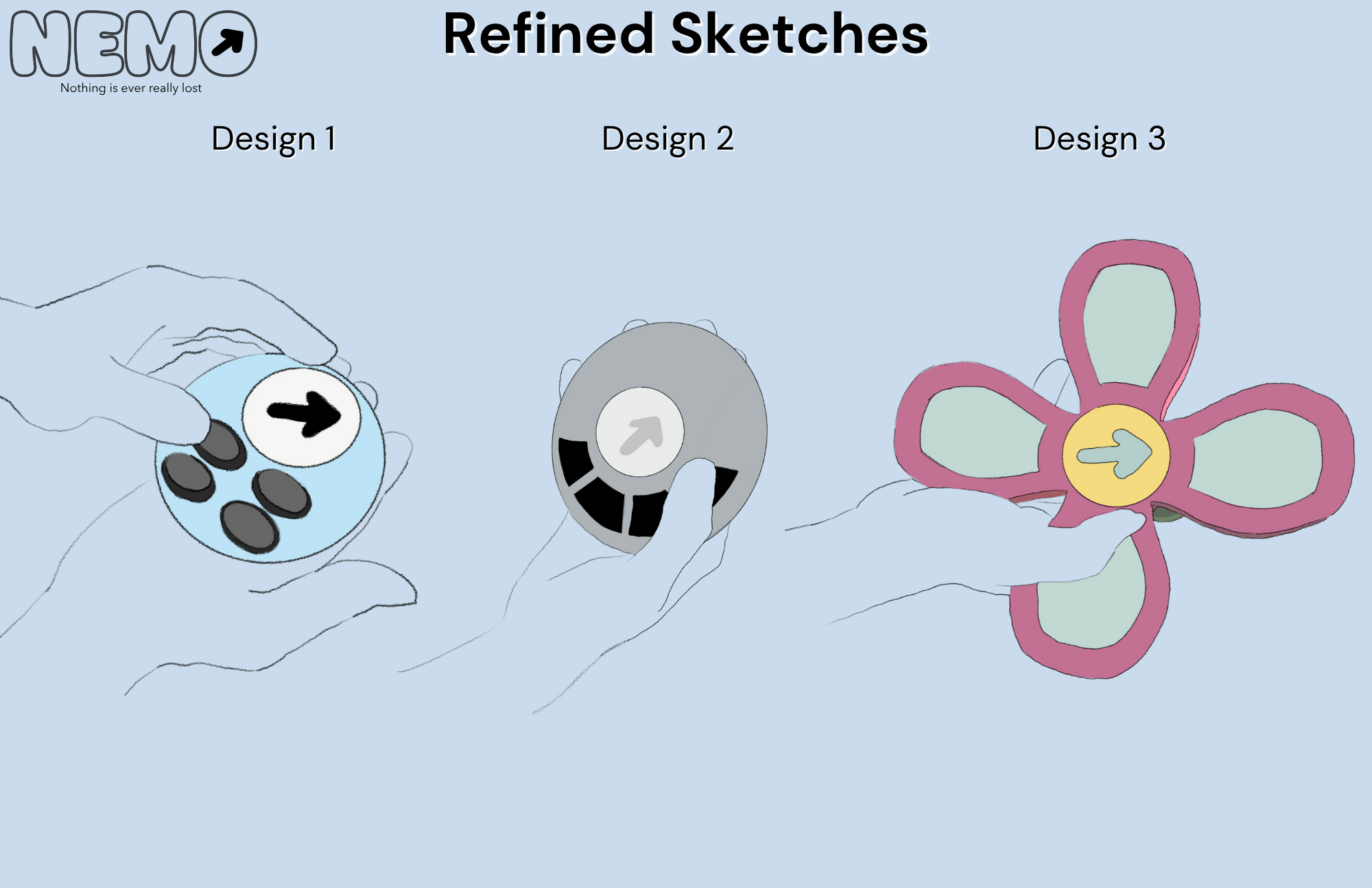
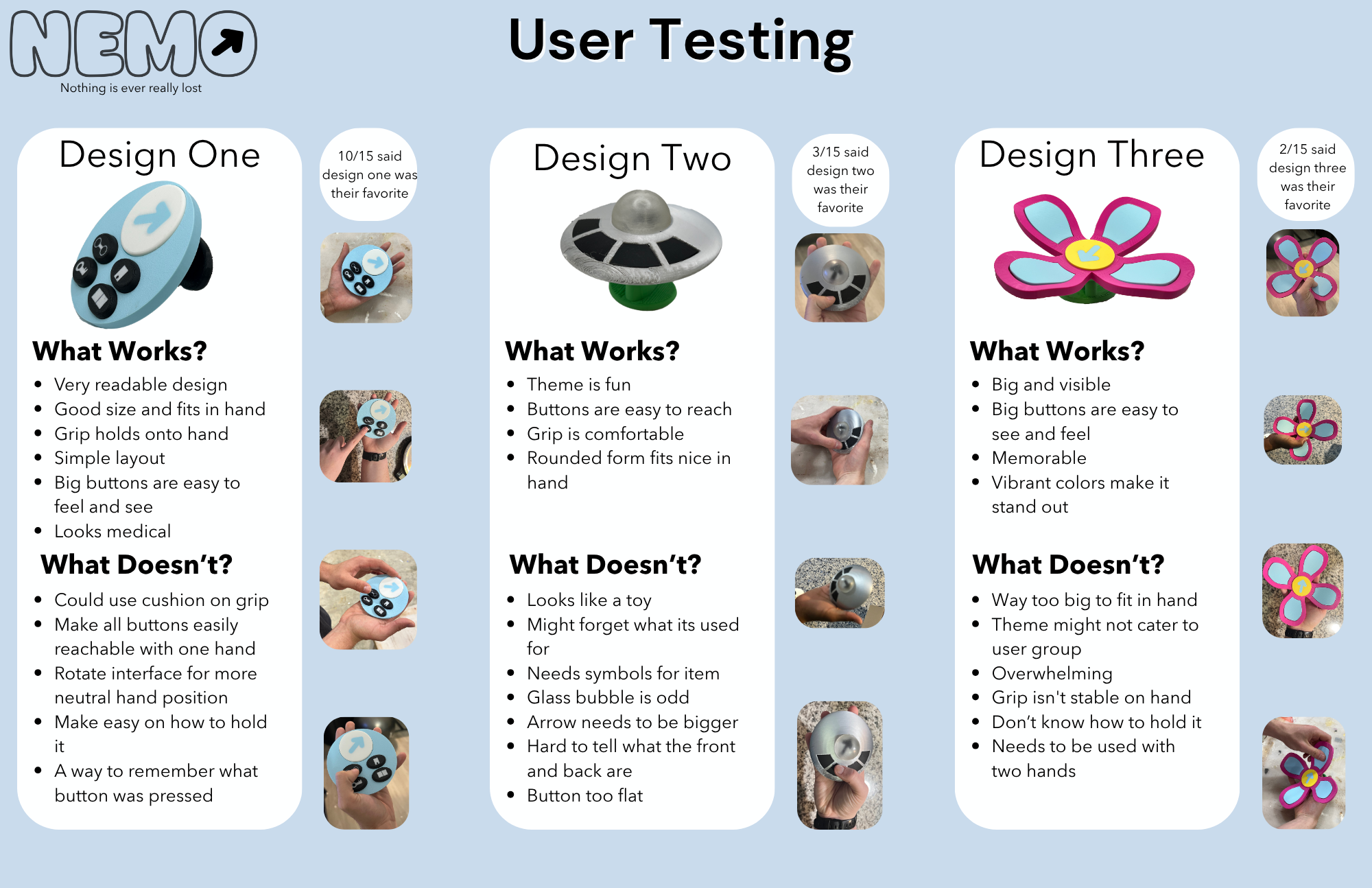
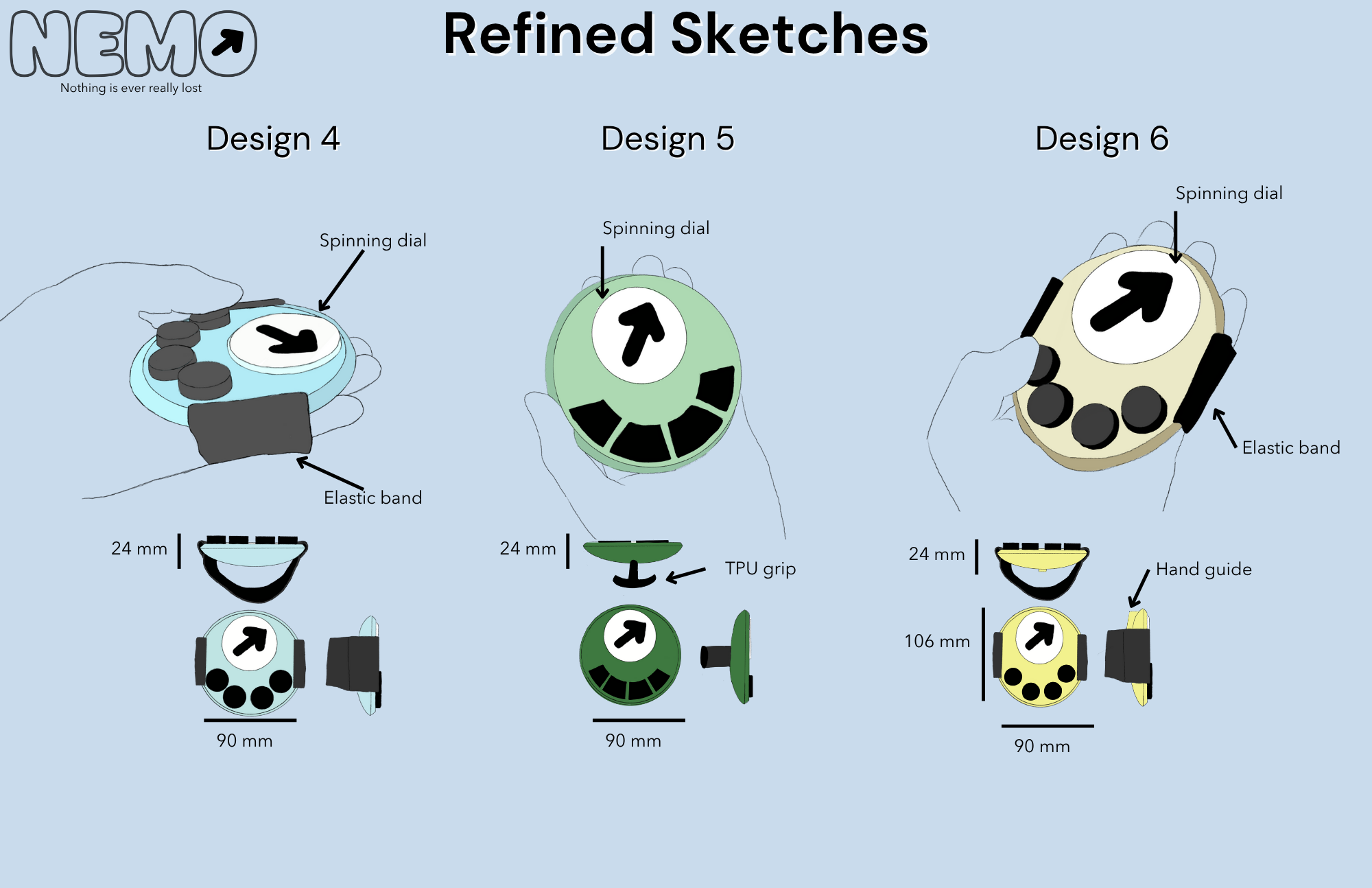
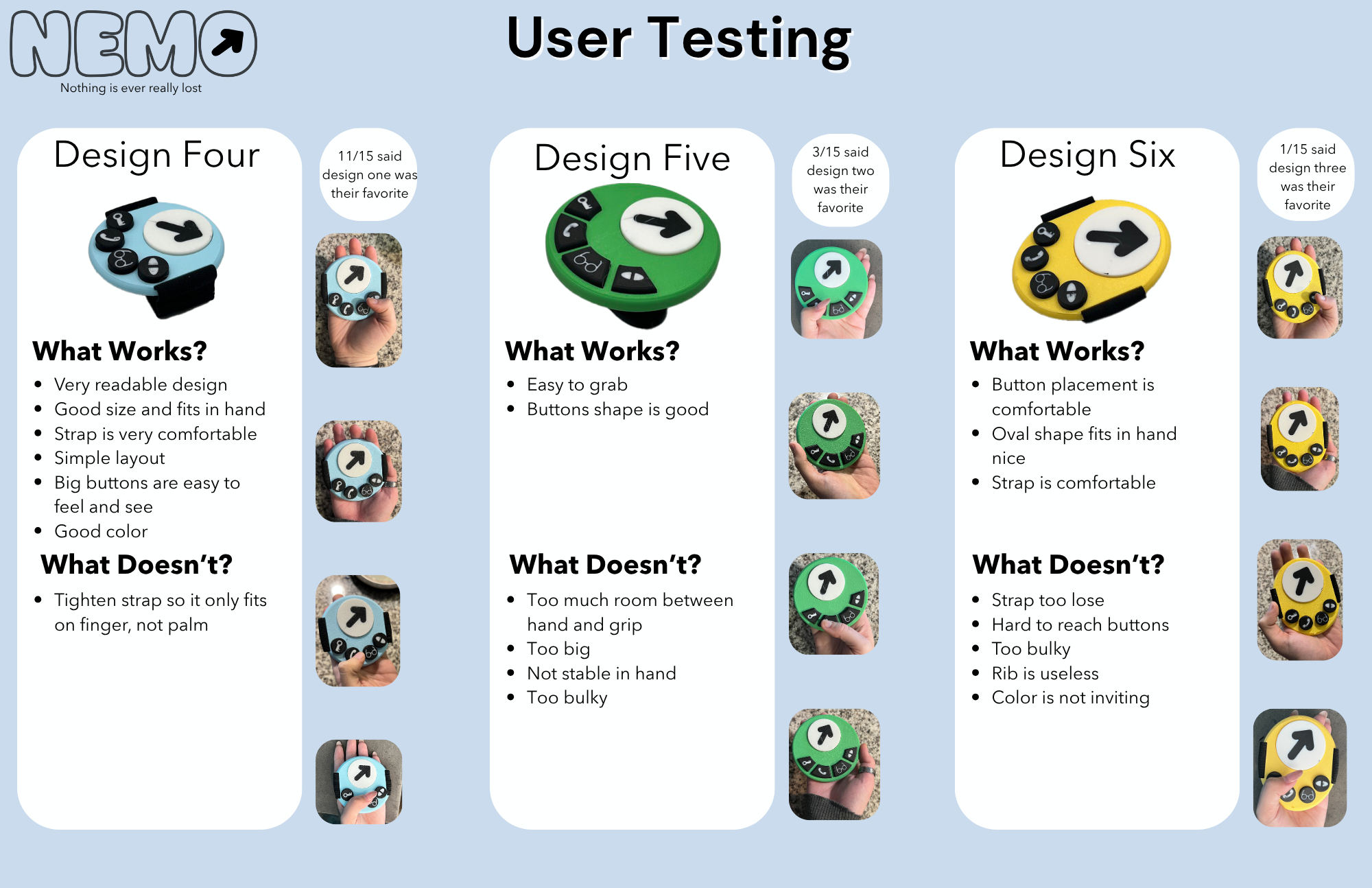
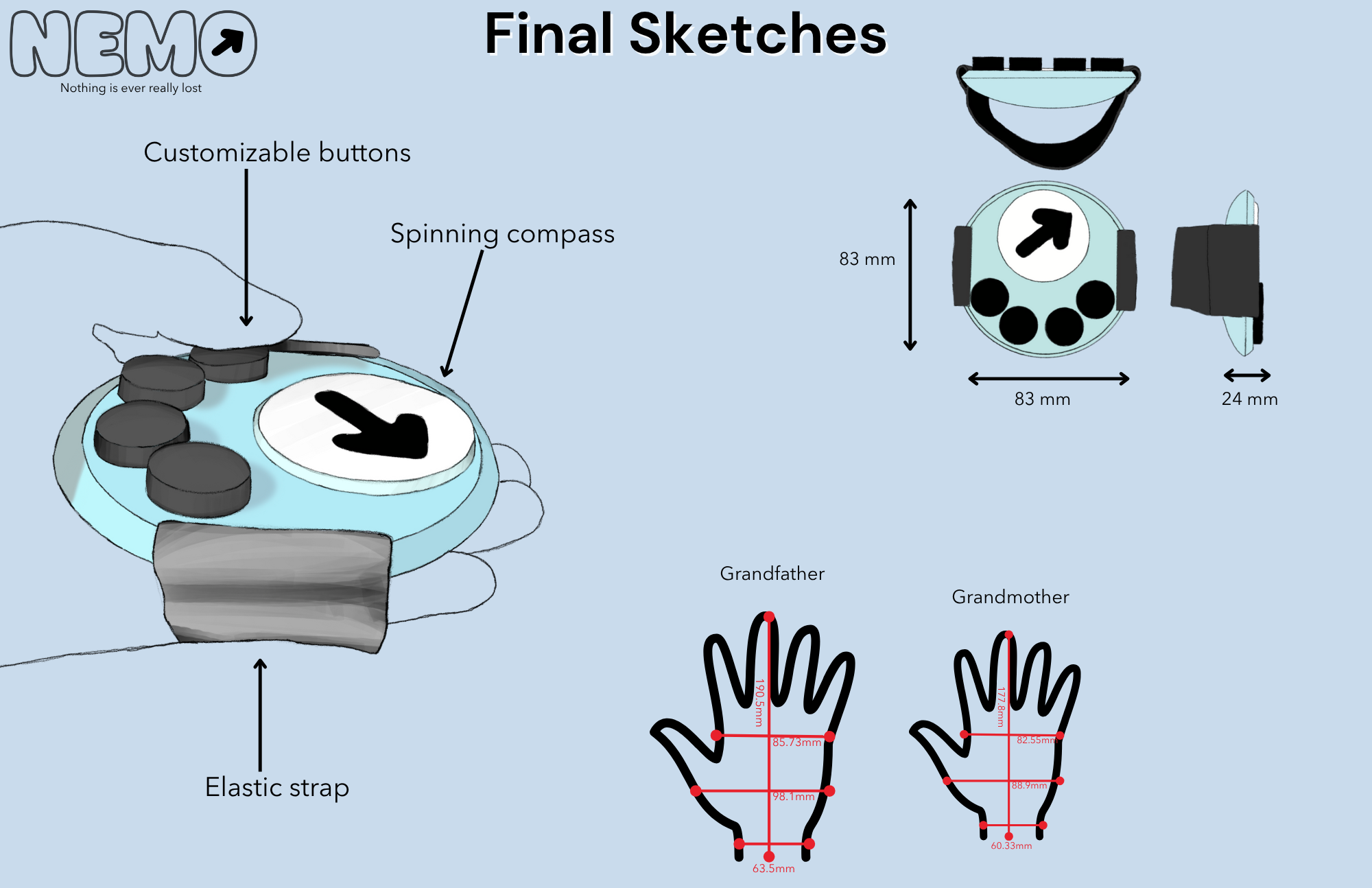
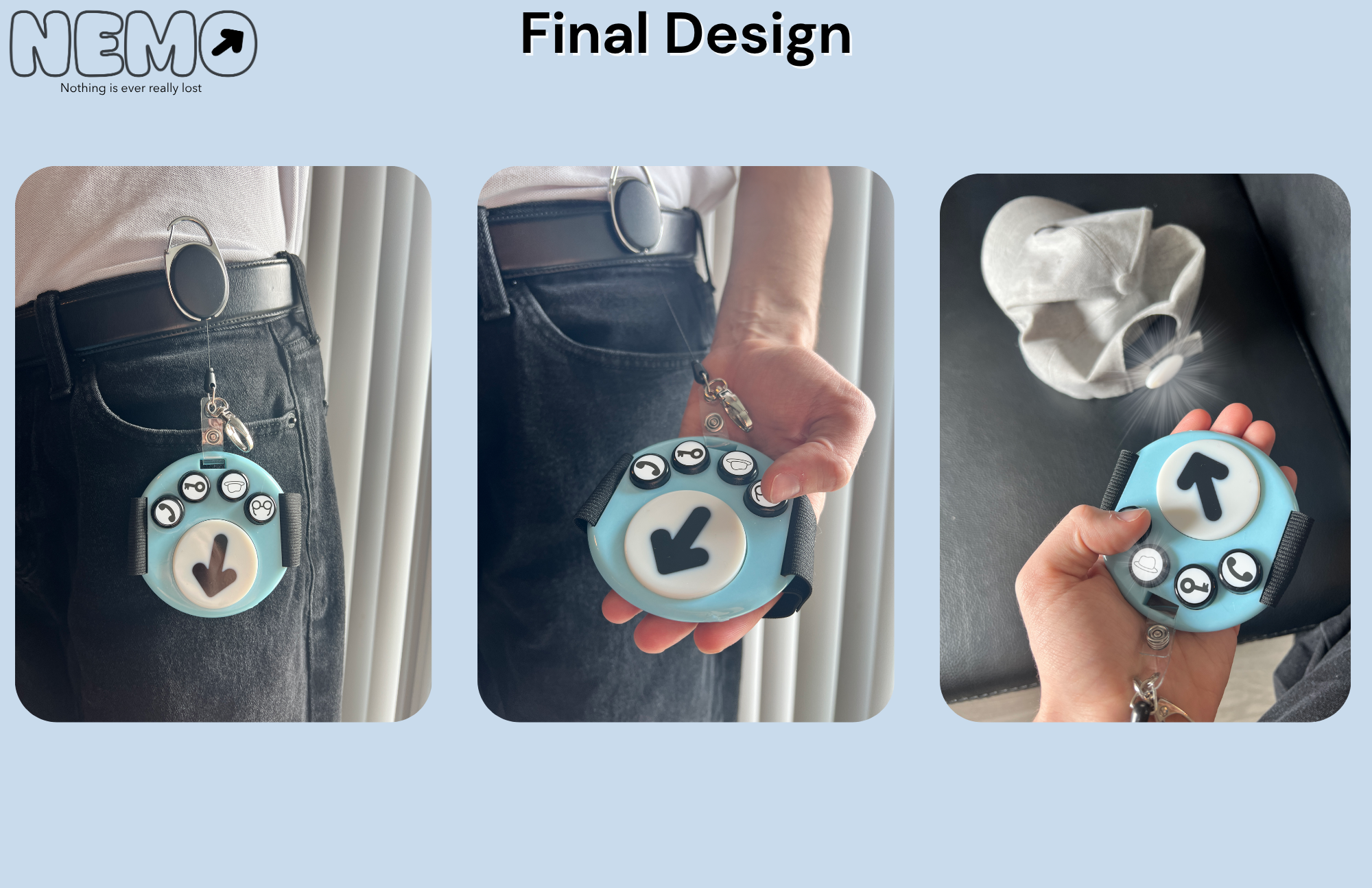
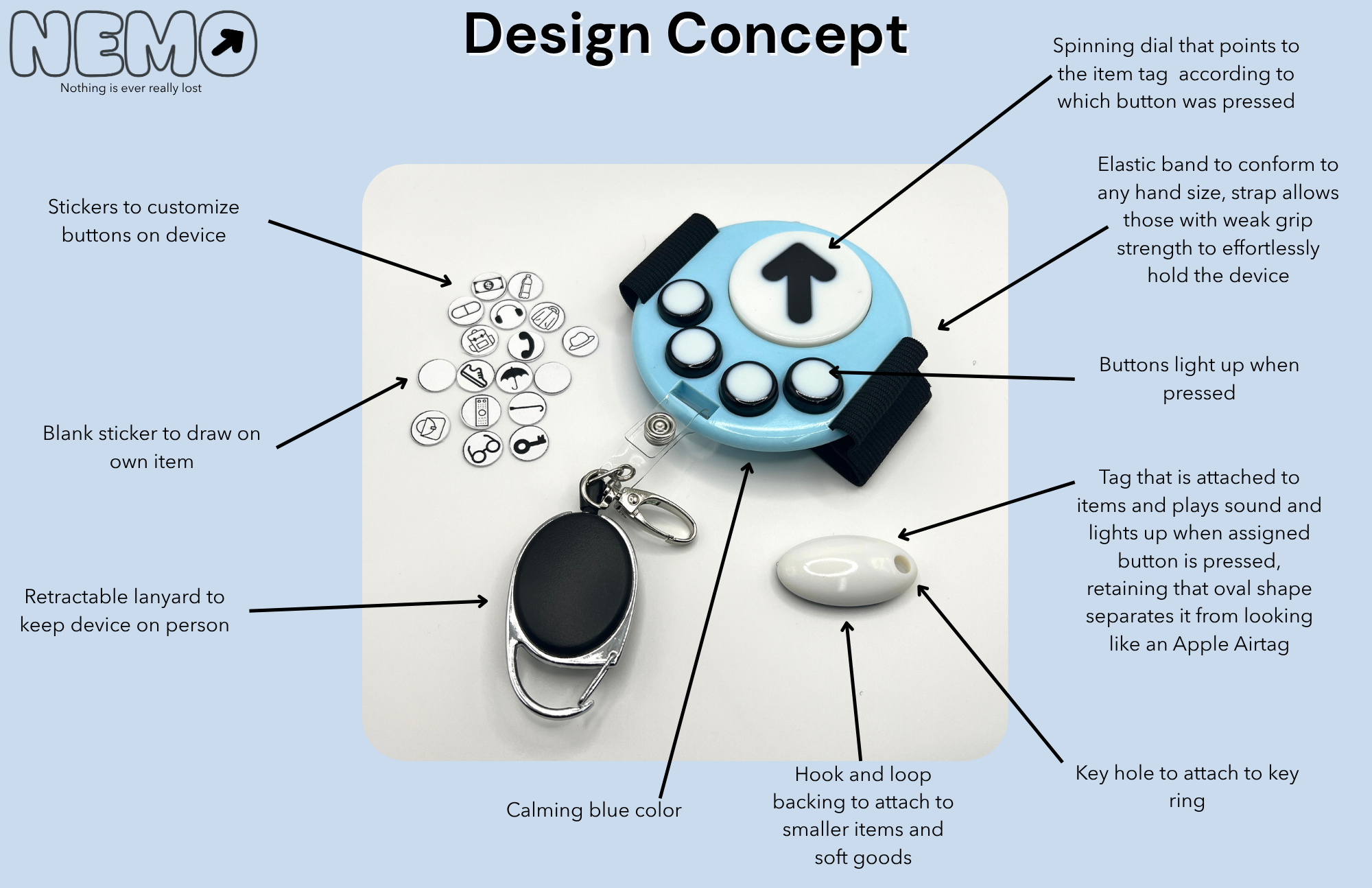
In response, I designed a representational tracking device intended to be comfortable to hold, intuitive to learn, and highly customizable. The device is operated one-handed and secured with an elastic hand strap for stability. Each button can be customized with visual stickers corresponding to specific personal items, each paired with a small tracker.
When a button is pressed, the device provides immediate multimodal feedback: the selected button illuminates, an arrow indicates the direction of the tracked item within the home, and the corresponding tracker emits light and sound to aid retrieval. To reduce the risk of misplacing the device itself, it is tethered to the user via a retractable lanyard that clips to a belt or waistband.
This project emphasized cognitive accessibility, clear affordances, redundancy in feedback, and emotional reassurance—prioritizing simplicity and familiarity over technical complexity.
Date
Spring 2025
Software
Rhino 8, Keyshot, Photoshop, Canva
Materials
PLA, Elastic, Paper, Tactile switches, Polymethyl Methacrylate resin